What the 2021 Guidelines Actually Changed About Clindamycin

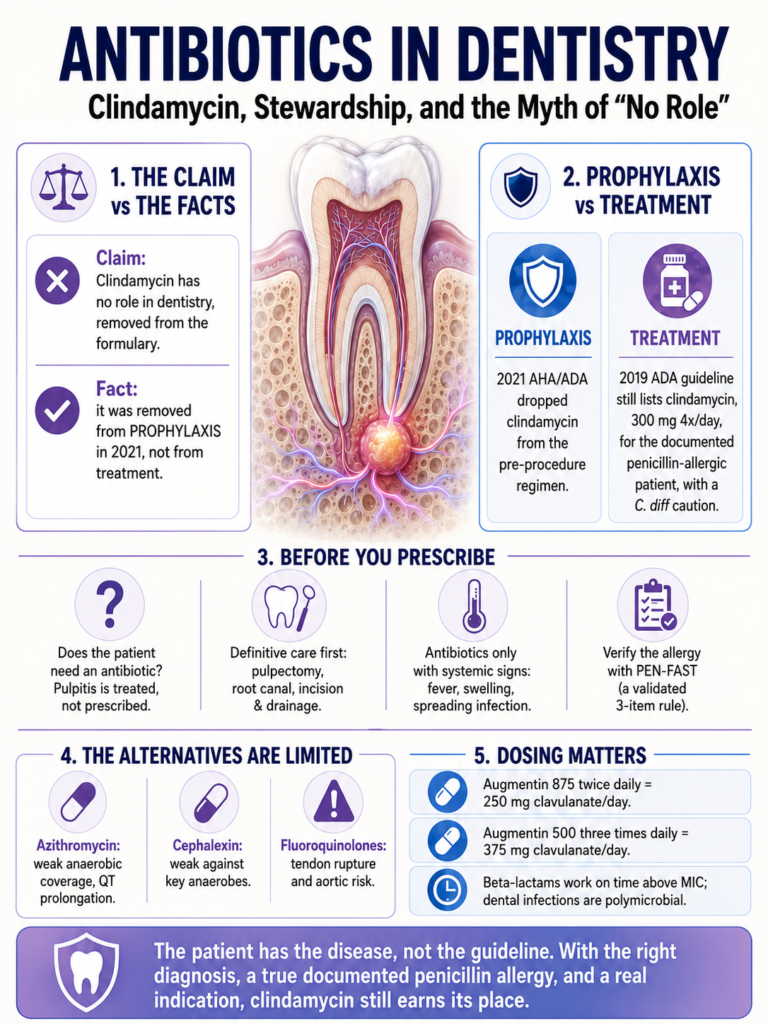
A CE Dojo clinical note A claim keeps circulating in dental circles: clindamycin has no role in dentistry anymore, it’s been pulled from the formulary, there’s no reason to use it. It gets repeated with confidence, usually pointing at the 2021 AHA and ADA update. The confidence is the problem, because the claim folds two […]

What the 2021 Guidelines Actually Changed About Clindamycin Read More »

Structural Wellness Part 4: Asymmetric Reporting

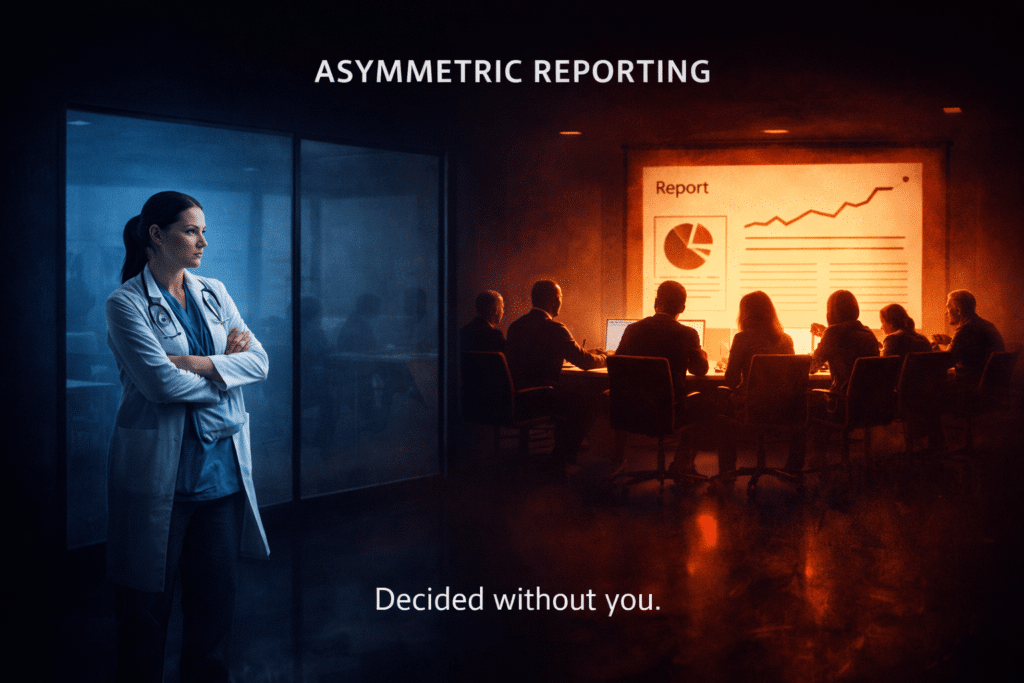
Not all information in a system flows equally. And what gets reported is not always what happened. What Do We Mean by “Reporting”? In clinical environments, “reporting” is often assumed to mean documentation. Charts. Notes. Records. But in practice, reporting is something else. It is the continuous, informal flow of information within a system: This

Structural Wellness Part 4: Asymmetric Reporting Read More »

When Wellness Becomes a Structural Response

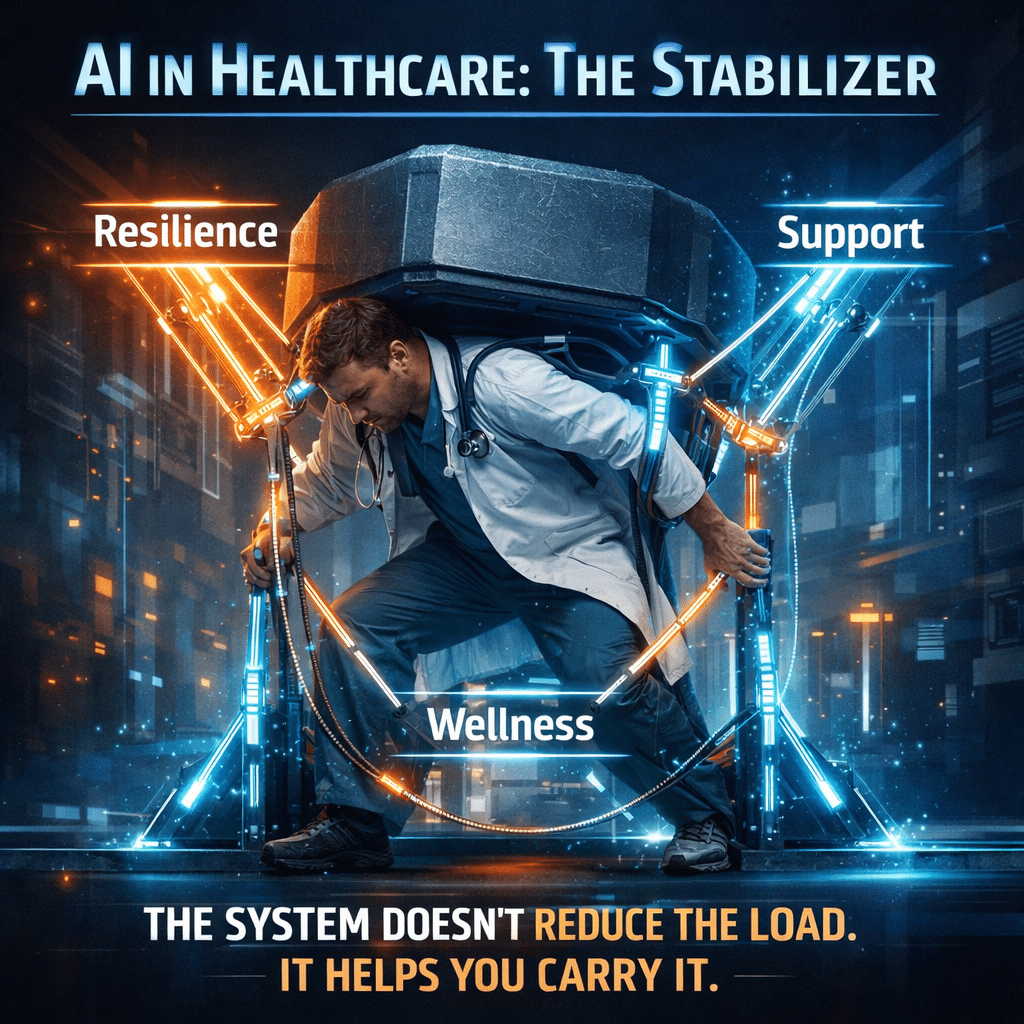
Why support systems in healthcare may stabilize pressure rather than reduce it Over the past several years, “wellness” has become a central focus in healthcare. Resilience training, mindfulness programs, coaching, and institutional support initiatives have all expanded in response to rising concerns about burnout, fatigue, and clinician dissatisfaction. At face value, this makes sense. The

When Wellness Becomes a Structural Response Read More »

Structural Wellness Part 3: Control, Accountability, and the Emergence of Wellness

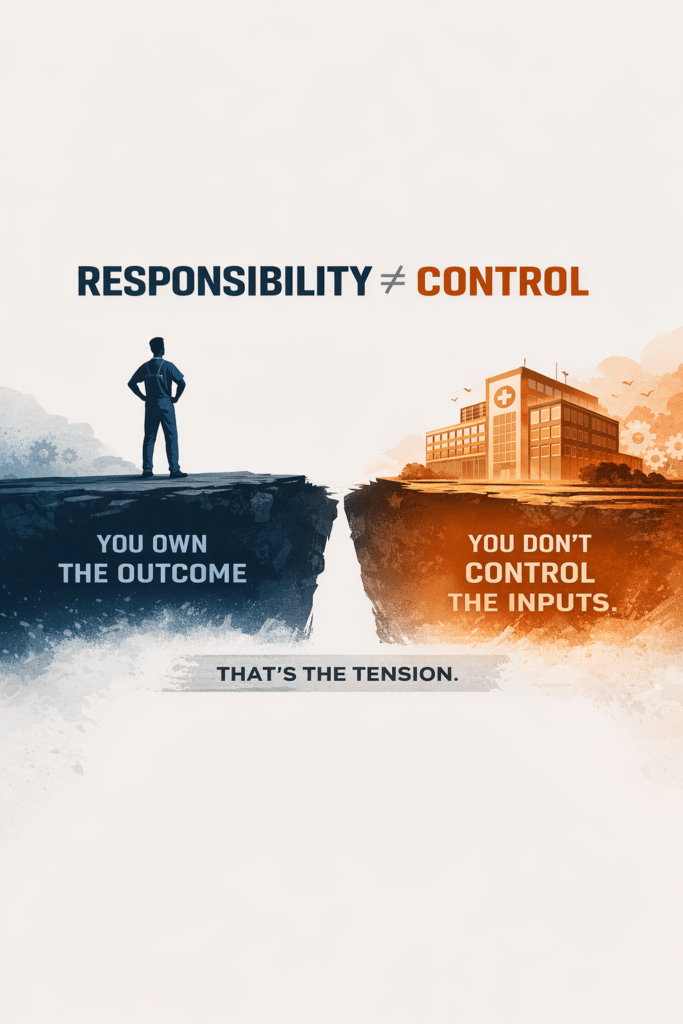
In clinical practice, responsibility is clear. Clinicians are accountable for outcomes. Less clear—and often unexamined—is the degree to which they control the inputs that shape those outcomes. This distinction may seem subtle. In practice, it is not. Control and Accountability In many healthcare environments, clinicians operate within systems where key elements are determined externally: At

Structural Wellness Part 3: Control, Accountability, and the Emergence of Wellness Read More »

When AI Solves Documentation, What Happens to Cognition?

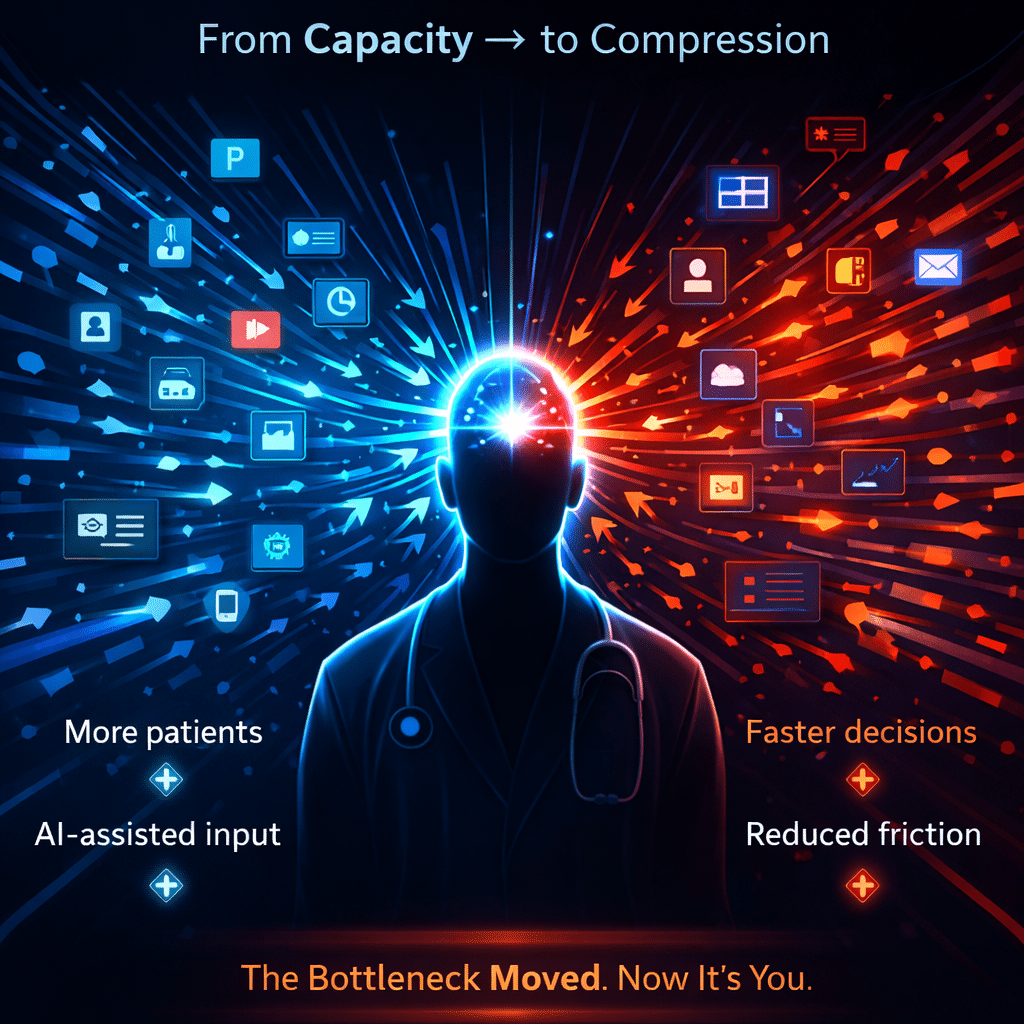
From Capacity Expansion to Cognitive Compression in Clinical Practice The current conversation around AI in healthcare has largely focused on documentation. AI scribes reduce charting time, improve workflow efficiency, and allow clinicians to spend more time with patients. These are meaningful improvements. But they also introduce a less obvious dynamic: capacity. When documentation friction is

When AI Solves Documentation, What Happens to Cognition? Read More »

AI Scribes in Dentistry: Who Controls the Gain?

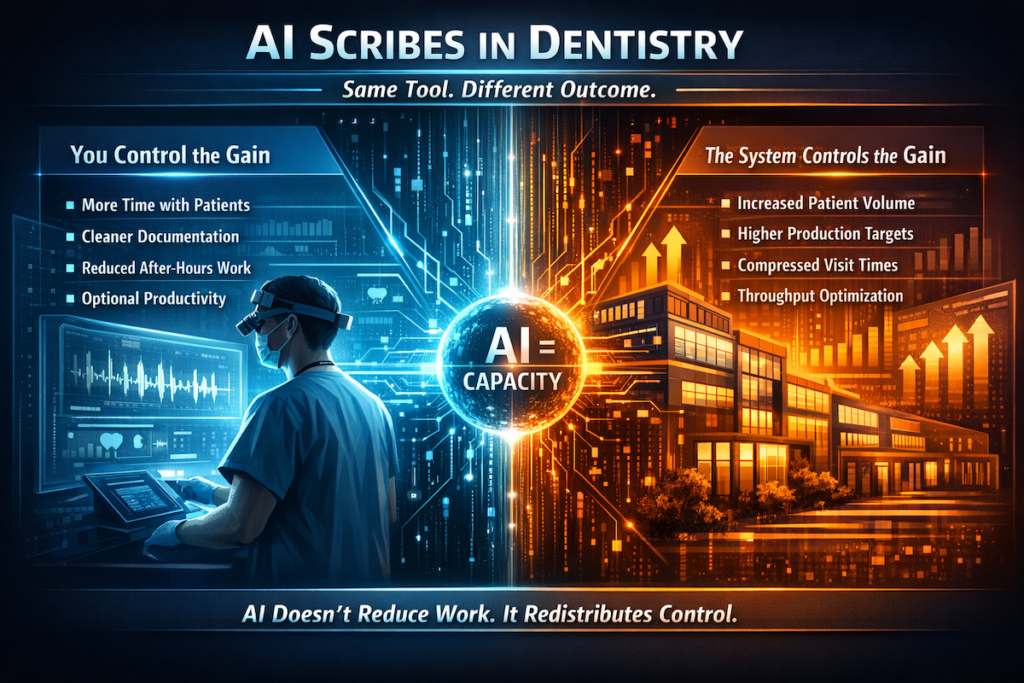
AI doesn’t reduce work. It redistributes control. Most dentists are still documenting the same way they did a decade ago. Typing. Clicking. Finishing notes after hours. AI scribes are starting to change that. But the real story isn’t about documentation. It’s about what happens to the time that gets freed up. AI Doesn’t Reduce Work

AI Scribes in Dentistry: Who Controls the Gain? Read More »

AI, Throughput, and the Cognitive Bottleneck in Healthcare

The rapid adoption of AI-driven documentation tools is often framed as a solution to clinician burnout. On the surface, the logic is straightforward: Reduce documentation burden → free up clinician time → improve well-being However, this framing may overlook an important second-order effect. The Constraint Doesn’t Disappear—It Moves In most healthcare systems, efficiency gains are

AI, Throughput, and the Cognitive Bottleneck in Healthcare Read More »

A Hypothesis: Could Metabolic Dysfunction Influence Addictive Behavior?

Substance use disorders in healthcare professionals are typically framed through behavioral, psychological, and social models. These frameworks are essential—and have led to meaningful progress in awareness, treatment, and support. However, an additional question may be worth exploring: Could underlying metabolic dysfunction influence reward-driven behavior? A Biological Layer Worth Considering Emerging research has begun to explore

A Hypothesis: Could Metabolic Dysfunction Influence Addictive Behavior? Read More »

Is AI About to Redefine the Standard of Care?

AI-Adjusted Standard of Care (AASC) — Part 2 After the last post, a few people asked a very reasonable question: “What does that actually mean?” Traditionally, standard of care is defined by: It evolves slowly. But AI introduces something new: → real-time pattern recognition→ population-level data→ continuous feedback Now imagine this: An AI system can

Is AI About to Redefine the Standard of Care? Read More »

If AI influences your decision…who’s liable?

If AI Sets the Standard… Who Owns the Decision? Yesterday I introduced the idea of an AI-Adjusted Standard of Care. If that’s true, there’s a second question that follows: If AI raises the standard… who is actually responsible when something goes wrong? Because the reality is: AI does not make decisions in isolation. It: But

If AI influences your decision…who’s liable? Read More »

Shopping Cart
Scroll to Top
0