A Hypothesis: Could Metabolic Dysfunction Influence Addictive Behavior?

Substance use disorders in healthcare professionals are typically framed through behavioral, psychological, and social models. These frameworks are essential—and have led to meaningful progress in awareness, treatment, and support. However, an additional question may be worth exploring: Could underlying metabolic dysfunction influence reward-driven behavior? A Biological Layer Worth Considering Emerging research has begun to explore […]

A Hypothesis: Could Metabolic Dysfunction Influence Addictive Behavior? Read More »

Is AI About to Redefine the Standard of Care?

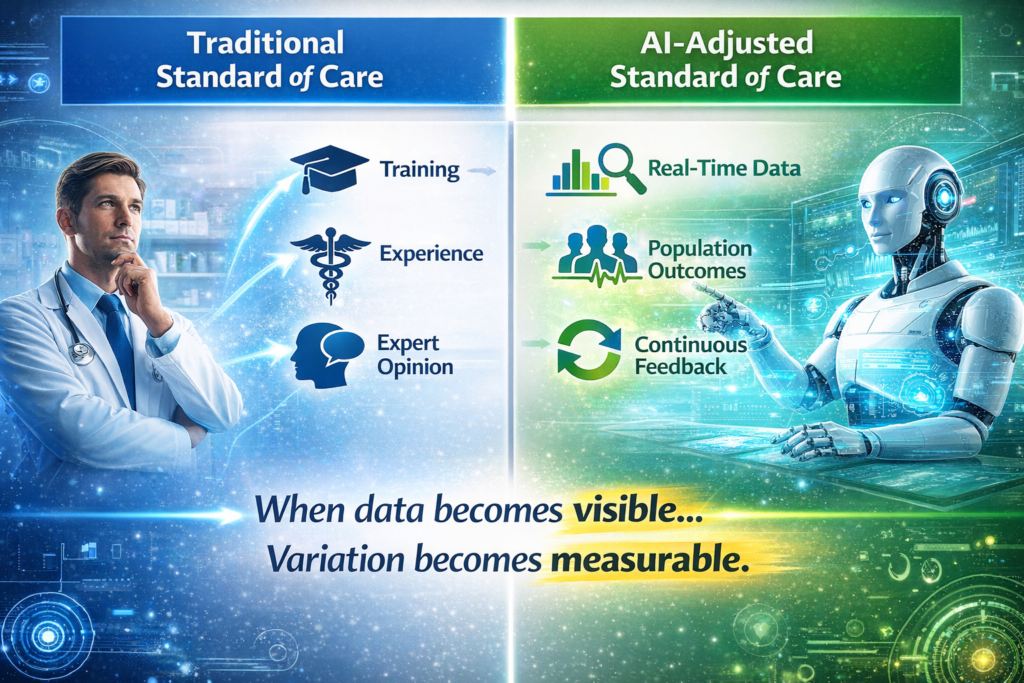
AI-Adjusted Standard of Care (AASC) — Part 2 After the last post, a few people asked a very reasonable question: “What does that actually mean?” Traditionally, standard of care is defined by: It evolves slowly. But AI introduces something new: → real-time pattern recognition→ population-level data→ continuous feedback Now imagine this: An AI system can

Is AI About to Redefine the Standard of Care? Read More »

If AI influences your decision…who’s liable?

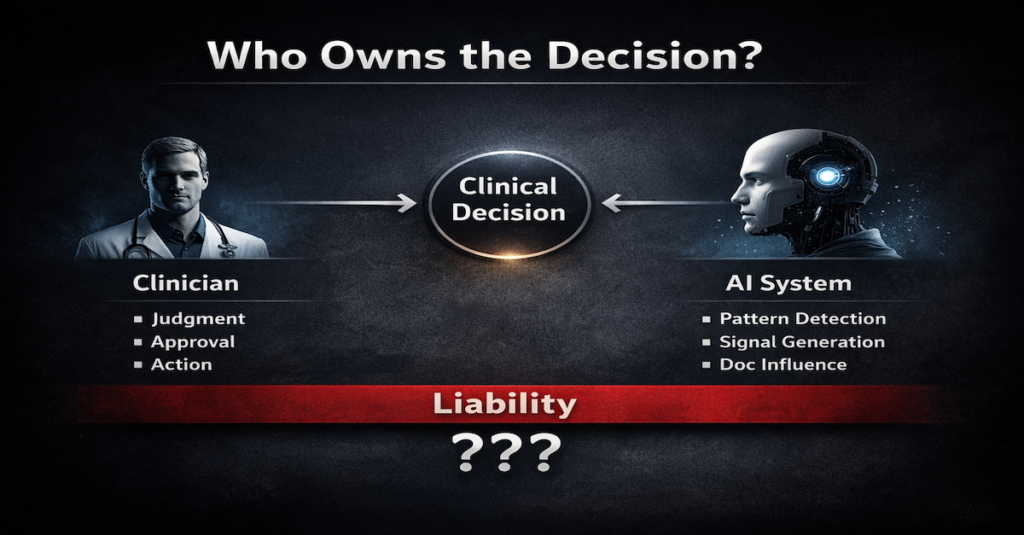
If AI Sets the Standard… Who Owns the Decision? Yesterday I introduced the idea of an AI-Adjusted Standard of Care. If that’s true, there’s a second question that follows: If AI raises the standard… who is actually responsible when something goes wrong? Because the reality is: AI does not make decisions in isolation. It: But

If AI influences your decision…who’s liable? Read More »

At what point does AI become the standard of care?

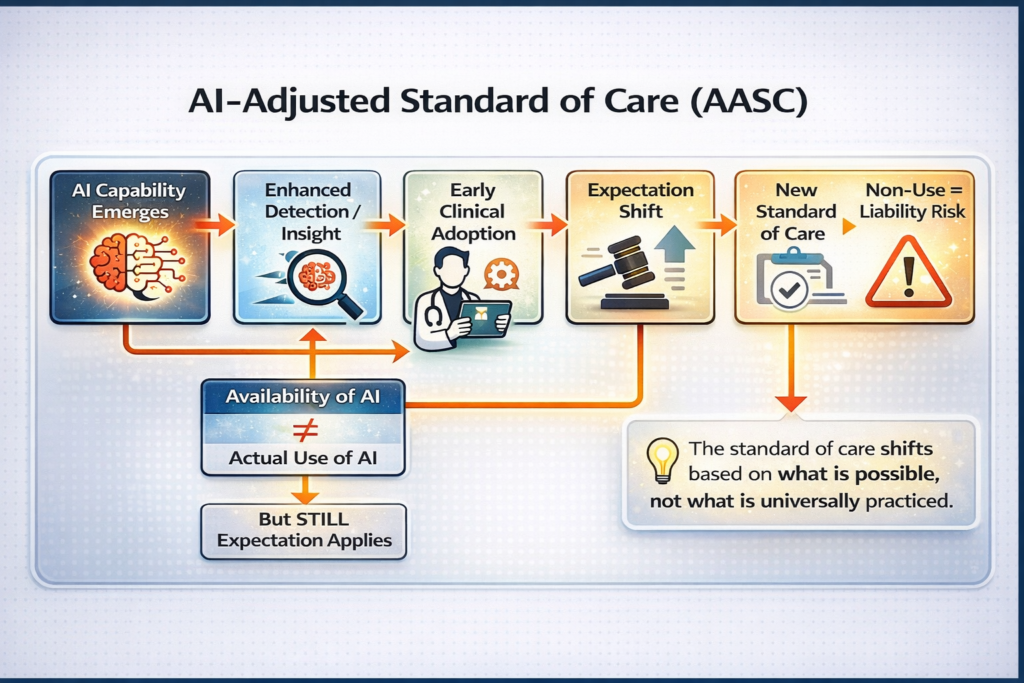
We’ve always defined the standard of care by what the average clinician does. That’s changing. AI is beginning to alter what is possible in clinical practice: It detects patternsIt surfaces riskIt documents more completely At first, this looks like optional improvement. Something extra. Something helpful. But over time, a shift occurs: Early adopters begin to

At what point does AI become the standard of care? Read More »

Why Dental Sedation Is Getting Harder — and Why Pushing Through Is the Wrong Response

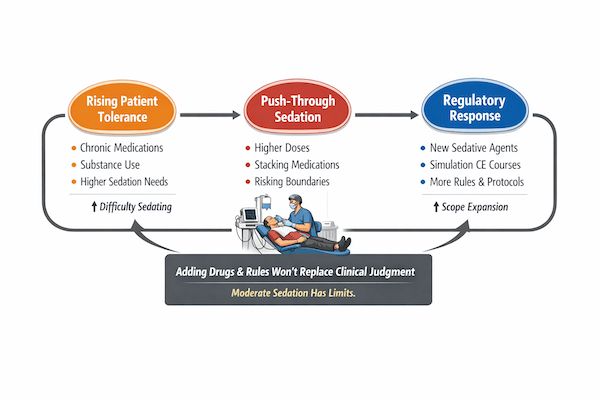
The Problem Across American dentistry, particularly in office‑based moderate sedation, a quiet but consequential shift is underway. Dentists, assistants, and regulators alike are noticing that patients are harder to sedate, require higher drug doses, and behave less predictably during and after procedures. This is not a matter of technique, effort, or professionalism. It reflects a

Why Dental Sedation Is Getting Harder — and Why Pushing Through Is the Wrong Response Read More »

**There Is No “I” in Team.

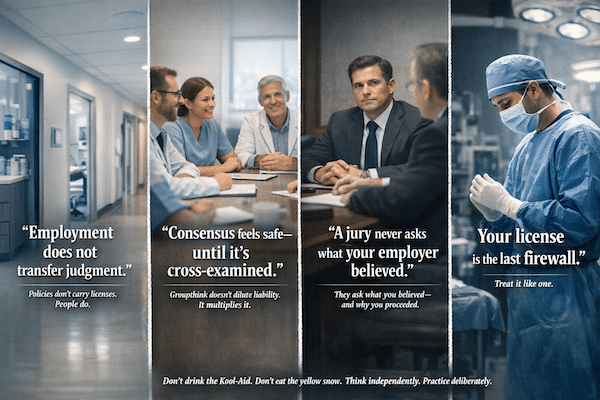
Except in Licensure** Editor’s note: This essay was prompted by a recent malpractice verdict reported by The Epoch Times, in which a jury found individual clinicians liable alongside their employers—underscoring the non-delegable nature of professional licensure. “There is no ‘I’ in team.” It’s one of the earliest lessons taught in health care—usually framed as a

**There Is No “I” in Team. Read More »

Overdose Deaths Are Falling. So Why Didn’t We Change Course Sooner?

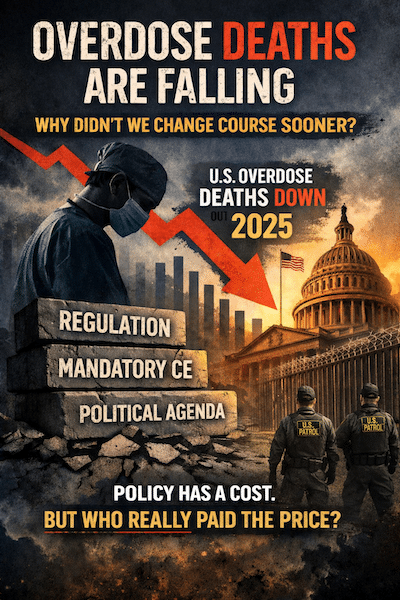
Federal data show that U.S. overdose deaths declined through most of 2025—marking the longest sustained drop in more than twenty years. Roughly a 20% year-over-year reduction is not statistical noise. It is real movement. And it raises an uncomfortable question: If progress is possible now, why was it politically impossible before? Policy Is Not Neutral.

Overdose Deaths Are Falling. So Why Didn’t We Change Course Sooner? Read More »

Why Our Practice Does Not Delegate CSRS (PDMP) Queries

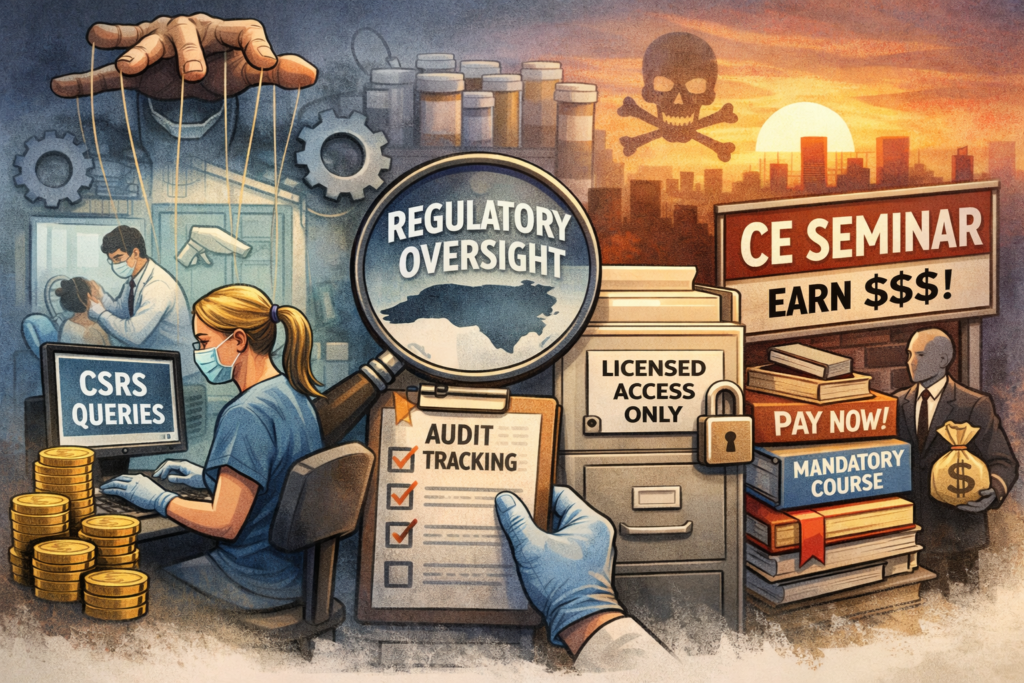
Recent changes to North Carolina’s Controlled Substances Reporting System (CSRS) now permit licensed delegates, including registered dental hygienists, to run PDMP queries on behalf of a supervising prescriber. While this option may be appropriate in certain institutional or high-volume environments, our practice has made a deliberate decision not to delegate CSRS access. This decision reflects

Why Our Practice Does Not Delegate CSRS (PDMP) Queries Read More »

A Brief Treatise About Expired Emergency Drugs

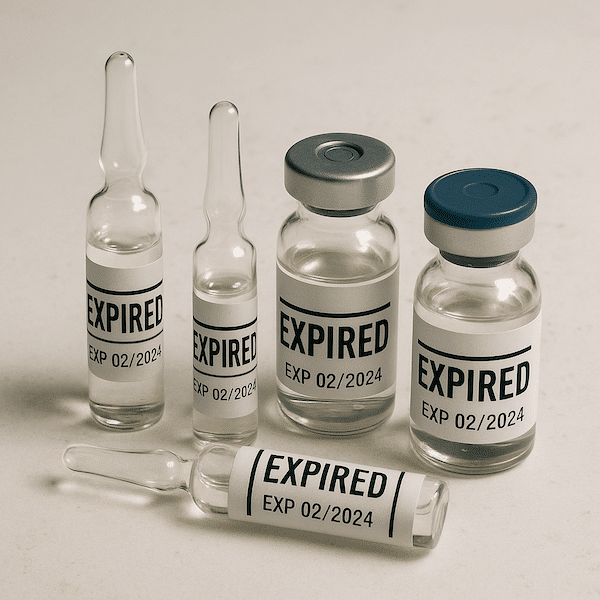
I occasionally hear stories about dentists being being cited by licensing boards for having expired emergency drugs – mostly for office based anesthesia. While I understand that having all of the necessary emergency equipment available – including unexpired drugs – I often wonder about the extent of the problem. You rarely hear about it as

A Brief Treatise About Expired Emergency Drugs Read More »

AI Healthcare Practitioners In Dentistry? Don’t Blink – It’s Already Here – And You Didn’t Even Know It!

A little over 4 months ago I posted a blog article to the effect that Congress had authorized artificial intelligence (AI) and machine learning health practitioners who could even prescribe drugs! I have often wondered how AI might find applications in Dentistry and how regulatory agencies – given the federal authorization – might receive it.

AI Healthcare Practitioners In Dentistry? Don’t Blink – It’s Already Here – And You Didn’t Even Know It! Read More »

Shopping Cart
Scroll to Top
0